
Parent Concern and the Future of Educational Screen Time
Screen Time in Education Part 5
A major influence on the screen-time discussion is not found inside boardrooms or research labs but at kitchen tables.

Parents across the country are increasingly concerned about how much time their children spend on screens at school and the effects on learning, behavior, and well-being.
What Parents Are Saying
Parents commonly express the following concerns:
- Children often return home feeling mentally fatigued.
- Children are having difficulty focusing on tasks that do not involve screens.
- There is a noticeable decline in interest in reading and creative play.
- Parents also express concerns about their children’s social development.

These concerns intensified after remote learning, as families observed more of their children’s daily lessons.
Advocacy and Awareness
Advocates such as Emily Cherkin help parents express concerns constructively and encourage collaboration with schools rather than conflict. As “The Screentime Consultant,” Cherkin promotes a “tech-intentional” approach grounded in child development and the informed use of educational technology.

This advocacy seeks not to eliminate technology, but to ensure learning environments support healthy development. Common Sense Media also offers free digital literacy resources and lessons to help students build skills in online safety, media balance, and critical thinking.
Together, these efforts promote a balanced approach: using technology thoughtfully while equipping students with the skills and habits needed to navigate digital spaces responsibly.
A Trust‑Building Opportunity
Although parent pushback can be challenging, it offers an opportunity for educators and parents to build trust as they prepare students for a technology-driven world.
Districts that clearly communicate when and why screens are used, and how this aligns with student needs, are better positioned to address these conversations productively.

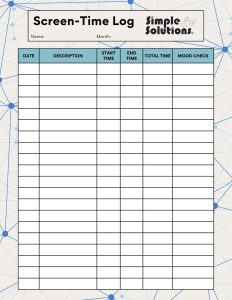
Free Resource: Screentime Tracker:
Are your students seeking ways to be more mindful about screen time? We create a free worksheet to help them track their technology use. It also includes space to record their mental state, allowing students to identify which technologies positively or negatively affect their well-being. Even younger kids can draw a smiley or sad face to help them begin exploring the concept.
Where the Conversation Is Heading
Looking ahead, the future of screen time in education will likely be shaped by intentional balance:
- Purposeful use of digital tools
- Greater emphasis on hands-on, collaborative learning
- Clear boundaries for time and context

Instead of asking whether technology belongs in schools, a more productive question is:
What kind of learning experiences do we want students to have, and which tools best support that vision?
This series has explored research, policy, and parent perspectives. Collectively, these point to a shared conclusion: decisions about screen time should focus on supporting students, not devices. Policymakers, educators, and parents share the goal of increasing student success and identifying necessary adjustments. Collaboration around students’ needs is key to achieving greater success in the classroom.